"We just need to add an AI layer to our existing process." This is one of the most common — and most expensive — misconceptions in enterprise AI projects. What people mean when they say "add AI" is actually building a five-layer system, each layer with its own requirements, failure modes, and maintenance burden.
Understanding the full stack before you build is the difference between an AI project that ships and one that quietly dies after six months of engineering time.
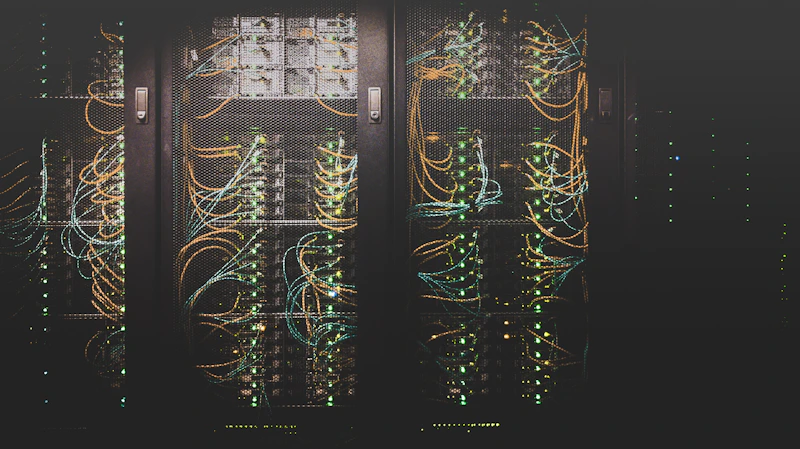
Every AI system runs on data. The data layer is where your business information lives — databases, CRMs, document stores, email systems, APIs from external vendors. Before building anything, this layer must be audited and addressed.
What this layer requires:
- Data is accessible — the systems holding the data can be queried programmatically
- Data is clean — inconsistent formats, missing fields, and duplicates all degrade AI performance
- Data is structured — unstructured data (PDFs, images, free-text fields) requires preprocessing before an AI can use it reliably
- Data is permissioned — the AI system has appropriate access without overly broad privileges
Common failure mode: Teams discover mid-project that the data they planned to use is in worse shape than assumed. A three-month AI project becomes a three-month data cleanup project.
The model layer is the AI itself — the LLM or specialized model that interprets inputs and generates outputs. Model selection matters: different models have different strengths, context window sizes, cost profiles, and reliability characteristics.
What this layer requires:
- Model selection matched to the task — general-purpose models (Claude, GPT-4) for language-heavy work; specialized models for domain-specific tasks
- Prompt engineering — the structured instructions that define how the model behaves for your specific use case
- Context management — deciding what information gets passed to the model on each call and how to handle context window limits
- Output validation — mechanisms to check model outputs before they're acted upon
Common failure mode: Teams treat the model as the entire system and spend all their time on prompt engineering while ignoring the other four layers.
The integration layer connects the AI to the tools and systems it needs to take action — your CRM, email system, ticketing platform, databases, payment processors, calendar, and any other business system the workflow touches.
What this layer requires:
- API access to each system the agent needs to read from or write to
- Authentication and credential management — secure handling of API keys and access tokens
- Error handling — graceful behavior when external systems are unavailable or return unexpected responses
- Rate limit awareness — respecting the limits of external APIs the agent calls
Common failure mode: This layer is usually the most time-consuming and most underestimated. "We'll just use the API" runs into authentication complexity, rate limits, undocumented edge cases, and systems that don't have APIs at all.
The orchestration layer is the logic that coordinates everything: how the agent breaks down tasks into steps, which tools to call in what order, how to handle exceptions, and when to escalate to a human.
What this layer requires:
- Workflow design — the complete map of what the agent does from trigger to completion
- Decision logic — how the agent handles branches, conditions, and edge cases
- Human escalation paths — clear rules for when the agent should stop and hand off to a person
- State management — how the agent tracks where it is in a multi-step workflow if interrupted
Common failure mode: Orchestration is where business logic lives — and business logic is messier than anyone admits upfront. The 20% of edge cases that don't fit the standard workflow consume 80% of the engineering time.
The operations layer is everything that happens after deployment — monitoring, alerting, feedback collection, model updates, and ongoing maintenance. This layer is routinely skipped in pilot projects and routinely causes production failures.
What this layer requires:
- Monitoring and alerting — detecting when the agent is performing poorly or failing silently
- Logging — recording what the agent does for debugging, compliance, and improvement
- Feedback mechanisms — ways for humans to flag incorrect agent outputs so the system can improve
- An operational owner — a person responsible for the system's performance who will act on alerts
Common failure mode: The agent ships, no one monitors it, it starts producing incorrect outputs, no one notices for months, and eventually someone discovers it has been creating garbage records in the CRM. AI systems drift — models update, APIs change, edge cases accumulate. Without operations, this is inevitable.

Why this matters for budget and timeline: Teams that plan for only the model layer (layer 2) routinely underestimate AI projects by 3–5x. When you scope for all five layers, timelines become realistic, budgets become accurate, and the projects that get approved are the ones that will actually ship. Projects scoped at only the model layer create the perpetual pilots and abandoned experiments that waste budget without compounding value.
Want a Realistic Scope for Your AI Project?
We assess all five layers before committing to any build — data access, model selection, integration complexity, orchestration design, and operational requirements. No surprises mid-project.
Talk to the Team